
1. Focus keyword analysis
– Focus keyword: social media detox ground rules
– Usage: place in intro, section headers, throughout body, conclusion.
– Synonyms/related: digital detox rules, social media boundaries, detox guidelines, social media challenge rules.
– Variations:
1. rules for a social media detox
2. social media detox guidelines
3. ground rules for a detox challenge
4. digital detox ground rules
5. social media cleanse rules
6. social media challenge guidelines
7. effective detox rules
2. Article structure and subsections
Main sections and planned content:
– Why You Need Social Media Detox Ground Rules
– digital overload effects
– why rules improve results
– mistakes without guidelines
– Essential Social Media Detox Challenge Rules
– set intentions
– allowed vs restricted apps
– daily limits
– Preparing Your Environment
– device settings
– offline alternatives
– notify your circle
– Accountability and Tracking
– partners/groups
– journaling
– triggers
– Reintegration After Detox
– boundaries
– lessons learned
– long-term plan
Word count plan (~1200 words):
– Intro: 120
– Section 1: 220
– Section 2: 260
– Section 3: 220
– Section 4: 200
– Section 5: 180
– FAQs: 160
– Conclusion: 100
3. Secondary keywords
– digital detox tips
– social media boundaries
– screen time reduction
– online habits
– digital wellbeing
– reduce social media use
– mental health and social media
– smartphone addiction
– digital balance
– tech-life balance
4. Intro and conclusion plan
Introduction:
– Hook with digital burnout stats
– Introduce importance of social media detox ground rules
– Mention “Social media detox challenge rules”
Conclusion:
– Recap rules’ importance
– Encourage personalized detox
– CTA to read related resources
5. Potential FAQ questions
– What are simple detox rules for beginners?
– How long is a healthy detox challenge?
– What if I slip up?
– Can a detox improve mental health?
– Should I delete apps?
– What activities replace social media best?
– How do I stay accountable?
6. Keyword incorporation strategy
– Focus keyword in intro, section 1 header, section 2 header, conclusion, FAQs
– Secondary keywords sprinkled across appropriate sections
– Natural distribution
7. Content outline with subsections and hooks
– Section 1: emphasize “why rules matter”
– Section 2: actionable steps
– Section 3: organize space and habits
– Section 4: accountability tools
– Section 5: reintegration strategies
8. Internal linking plan
Topics for links:
– Digital Wellbeing Benefits (#internal-link)
– Screen Time Management Tips (#internal-link2)
– Offline Hobby Ideas (#internal-link3)
– Productivity Tracking Tools (#internal-link4)
– Post-Detox Digital Balance (#internal-link5)
9. Reader challenges and solutions
– Fear of missing out → reassure with strategies
– Worry about relapse → offer trigger management
– Unsure how to structure detox → provide clear rules
– Social pressure → teach communication strategies
– Boredom → offer alternatives
In a world that feels constantly “on,” setting clear social media detox ground rules can help you reclaim your focus, mental clarity, and peace of mind. Digital burnout is becoming more common, and many people are turning to structured detox challenges to break the cycle. By following proven Social media detox challenge rules, you give yourself the framework you need to stay consistent and see meaningful results. In this guide, you’ll learn how to create effective rules, prepare your environment, stay accountable, and transition back into social media with healthier boundaries.
Table of Contents
- Why You Need Social Media Detox Ground Rules
- Essential Social Media Detox Challenge Rules
- Preparing Your Environment for a Successful Detox
- Building Accountability and Tracking Progress
- Reintegration After the Detox
Why You Need Social Media Detox Ground Rules
Without clear expectations and boundaries, a social media detox can feel confusing or overwhelming. Setting rules lays the foundation for a smoother challenge and helps you maintain consistency.
Understanding Digital Overload and Its Effects
Constant notifications, endless scrolling, and comparison culture can increase stress and disrupt your mood. Many people don’t realize how much social media affects concentration, sleep, and emotional wellbeing. This is why creating specific guardrails is essential for long-term change. Learn more in our resource on Digital Wellbeing Benefits.
For data on modern digital habits, visit the Pew Research Center: https://www.pewresearch.org
How Ground Rules Improve Detox Success Rates
Rules create structure. The clearer your boundaries, the easier it is to follow through. Whether you’re cutting back or going cold turkey, guidelines reduce decision fatigue and help maintain momentum.
Common Mistakes Without Clear Detox Rules
- Checking “just for a second” and slipping back into old habits
- Not removing triggers like push notifications
- Underestimating emotional attachment to apps
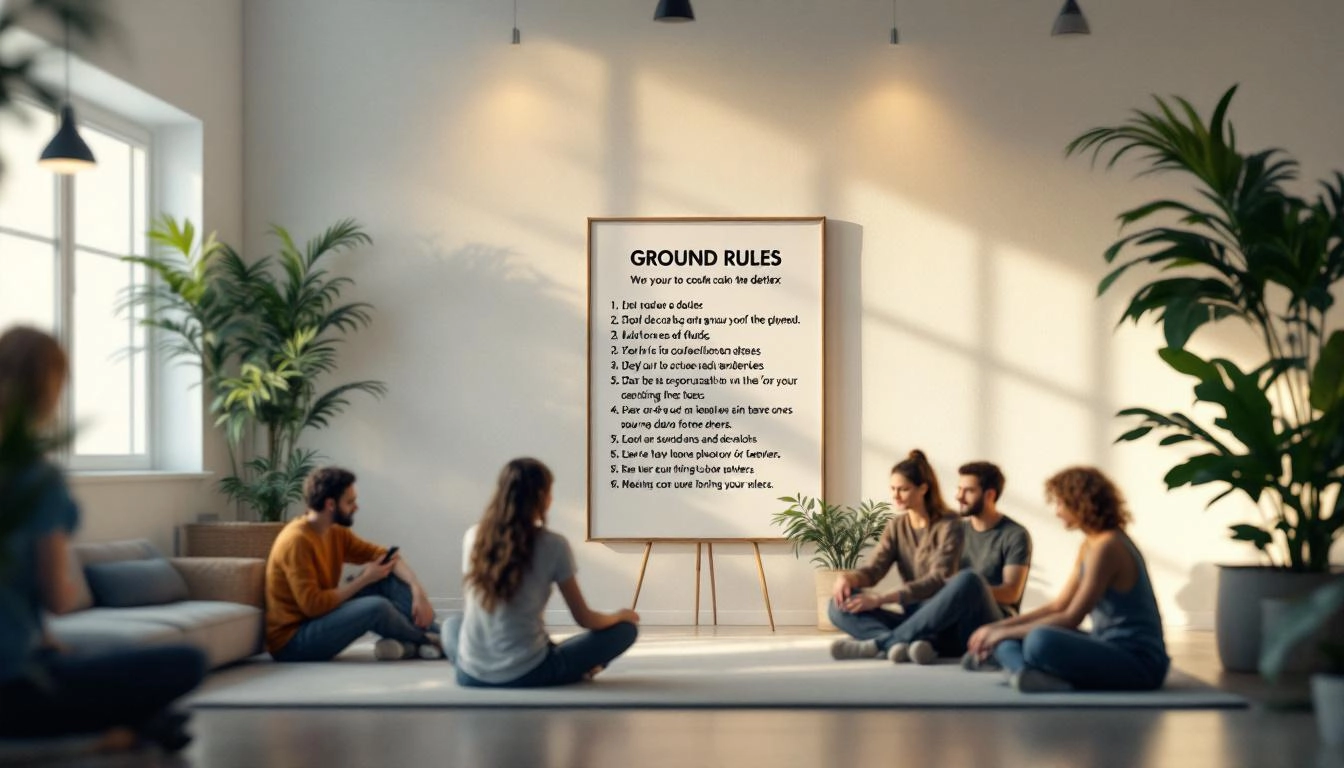
Essential Social Media Detox Challenge Rules
To get the most benefit from your detox, establish clear Social media detox challenge rules that match your goals and lifestyle.
Setting Clear Intentions and Goals
Before you start, define why you want to detox. Are you trying to reduce anxiety, improve focus, or reclaim time? Your intention will guide your rules and keep you motivated.
Defining Allowed vs. Restricted Platforms
Decide which apps you’ll avoid and which, if any, are still allowed. For some people, messaging apps are necessary but social feeds are not. Tailor the rules to your needs.
Establishing Daily Time-Limits and Check-in Points
Completely removing social media isn’t always necessary. If you choose a partial detox, set firm time-limits and decide when you will check your phone. For more strategies, see our guide on Screen Time Management Tips.
For mental health guidance, visit the APA: https://www.apa.org
Preparing Your Environment for a Successful Detox
Your environment heavily influences your habits. Adjusting your physical and digital space can make your detox easier.
Organizing Your Devices and Notifications
Turn off notifications, remove social apps from your home screen, or log out completely. Small steps can dramatically reduce temptation.
Creating Offline Alternatives and Activities
Replace scrolling with healthier habits. You might take up reading, journaling, exercise, or creative hobbies. Explore ideas here: Offline Hobby Ideas.
For healthy routines, see CDC guidelines: https://www.cdc.gov
Informing Friends and Followers About Your Detox
Letting people know you’re unplugging reduces pressure to respond quickly and makes it easier to maintain boundaries.
Building Accountability and Tracking Progress
Having support and tracking your journey significantly increases your success rate.
Choosing an Accountability Partner or Group
Partner with a friend or join a community focused on digital wellness. Mutual encouragement helps you stay consistent.
Using Journals or Progress Trackers
Document your thoughts and triggers throughout the challenge. This helps you stay aware of old patterns. Try our collection of Productivity Tracking Tools.
For additional guidance, explore Harvard Business Review: https://hbr.org
Identifying and Managing Trigger Moments
Notice when you feel the urge to check social media. It may be boredom, stress, or habit. Once you understand triggers, you can develop healthier coping strategies.
Reintegration After the Detox
Once your detox ends, ease back into social media with intention and awareness.
Setting Long-Term Social Media Boundaries
Create rules like “no phone before breakfast” or “no social media after 9 PM.” These small boundaries build digital balance.
Reflecting on Lessons Learned
Take notes on how the detox improved your wellbeing. Assess what you want to change permanently and what you want to bring back.
Creating a Sustainable Digital Wellness Plan
Build a long-term routine with regular breaks and mindful usage. Explore our guide on Post-Detox Digital Balance.
For wellness support, visit the Mayo Clinic: https://www.mayoclinic.org
Frequently Asked Questions
What are the most important social media detox ground rules for beginners?
Start simple: remove notifications, set time-limits, and choose specific apps to avoid. Focus on consistency.
How long should a social media detox challenge last?
Most people benefit from 7–30 days depending on their habits and goals.
What should I do if I relapse during my detox challenge?
A relapse is normal. Identify your trigger, adjust your plan, and continue the challenge without guilt.
Should I delete my social media apps during the detox?
Deleting apps can help, but logging out or hiding them may be enough for some people.
Can a social media detox improve mental health?
Yes. Many people report reduced stress, better focus, and improved sleep during and after detox periods.
Conclusion
Setting strong social media detox ground rules gives you the structure you need to stay committed and see real change. As you follow these Social media detox challenge rules, remember to personalize them to fit your lifestyle and goals. Start small, stay consistent, and explore additional resources to continue building a healthier digital life. Your mind—and your time—will thank you.
For the reason that the admin of this site is working, no uncertainty very quickly it will be renowned, due to its quality contents.